Running a carbon neutral home with Home Assistant
Written on Sunday, 15 March 2026 at 12:00.
Tags: Home Assistant, Energy, EVCC.
How I use solar panels, a heat pump, an EV charger, and a battery to run a (nearly) carbon neutral home. By combining Home Assistant and EVCC with dynamic energy pricing, I built a HEMS that maximizes self-consumption and minimizes costs.
The setup
My home energy system consists of four key components:
- 10 kW solar inverter with matching panels on the roof
- Indevolt battery for storing excess solar energy
- R290 heat pump for heating and domestic hot water (DHW)
- EV charger managed by EVCC
The brain of the operation is split between Home Assistant for general home automation and EVCC for EV charging logic. Both work together to shift as much energy consumption as possible to moments when the sun is shining or when EPEX spot prices are at their lowest.
The strategies
Shift heating to daylight hours
The heat pump is the biggest consumer in the house. By increasing the heating setpoint by +2°C during the day, the house absorbs enough thermal energy to coast through the evening and night. This way, the heat pump mostly runs when solar production is at its peak.
Smart EV charging with EVCC
EVCC handles the EV charging with two modes:
- Solar-only: charge exclusively on surplus solar energy
- Cheapest hours: when solar isn't enough, charge during the cheapest EPEX spot price windows
This combination means the car is almost always charged at the lowest possible cost.
Kitchen boiler on a schedule
The kitchen boiler is only powered on during daylight hours. There's no need to keep water warm overnight, and by the time we need hot water in the morning, the sun is usually up.
Boost domestic hot water at peak solar
Between 12:30 and 13:30, the DHW setpoint is increased from 35°C to 55°C. This is the window with the highest solar production, so the heat pump can heat the water tank almost entirely on solar energy.
Legionella run on Sunday afternoon
The weekly legionella prevention cycle (heating DHW above 60°C) is scheduled for Sunday afternoon. Again, this is a moment with typically high solar production and low electricity demand.
The result
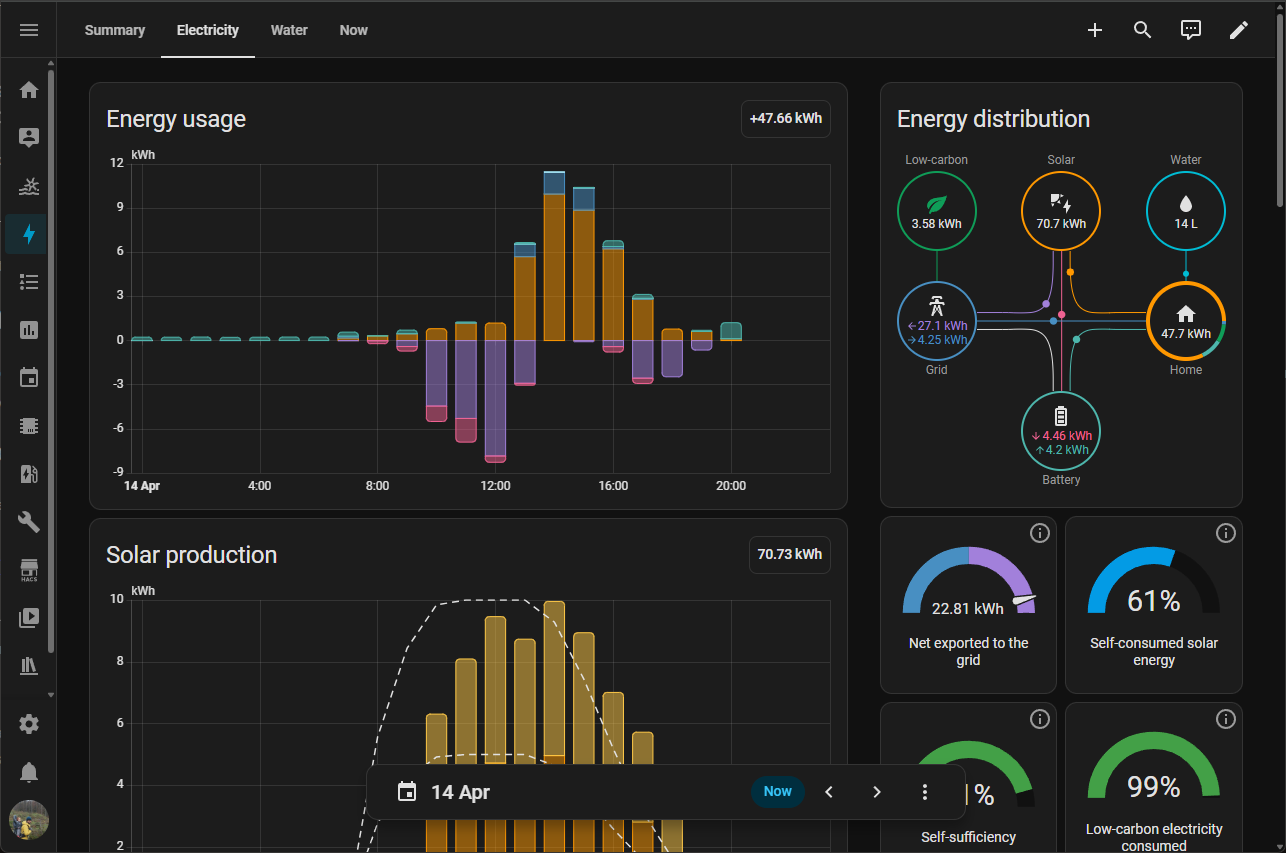
By combining these strategies, most of the heavy energy consumption happens during solar production hours. The dynamic pricing fallback ensures that whatever can't be covered by solar is consumed at the cheapest possible rate. The battery takes care of bridging short gaps and shaving peak grid consumption.
Todo:
- add something about capacity tarrif